After waste oil is collected from a garage, factory, transport depot or other commercial site, it does not simply disappear into a general waste stream.
It normally enters a controlled process involving transportation, classification, testing, separation and treatment. Depending on its condition and composition, the oil may be recovered for further use, processed into a fuel product, re-refined to recover useful base oil or sent for another authorised treatment or disposal route.
The precise journey depends on what the waste oil contains. Relatively clean used lubricating oil may offer greater recovery potential than oil mixed with water, solvents, brake fluid, coolant, fuel or other workshop waste.
This is why businesses should keep waste streams separated and use an appropriately authorised collector. The way oil is stored before collection can affect both its environmental risk and the options available once it reaches a treatment facility.
Used automotive and industrial oils are generally treated as hazardous waste because they may contain substances that are harmful to people or the environment. Businesses must classify their waste before it is collected, recovered or disposed of so the correct controls can be applied.
Where does waste oil come from?
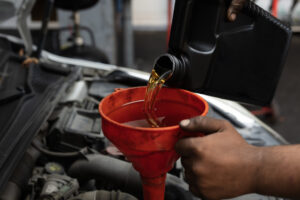
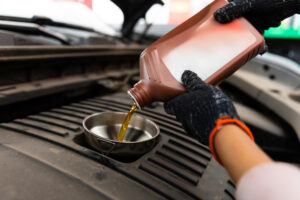
Waste oil can be generated by many commercial and industrial activities.
Common sources include:
- Vehicle servicing and maintenance
- Engine oil changes
- Industrial machinery
- Hydraulic systems
- Gearboxes
- Compressors
- Manufacturing processes
- Agricultural equipment
- Transport fleets
- Engineering workshops
Oil may become waste because it has reached the end of its intended service interval, become contaminated or no longer meets the requirements of the machinery in which it was used.
The term waste oil can cover several different materials. It might refer to used engine oil drained from a vehicle, hydraulic oil removed during maintenance or a mixture recovered from an interceptor or contaminated storage tank.
These materials cannot necessarily be treated in the same way.
The collector and treatment facility need to know what the oil is, where it came from and whether it has been mixed with anything else.
What happens before waste oil is collected?
The treatment process begins while the oil is still on the producer’s premises.
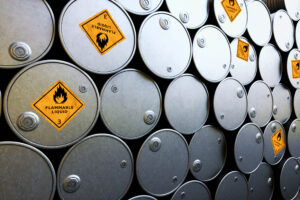
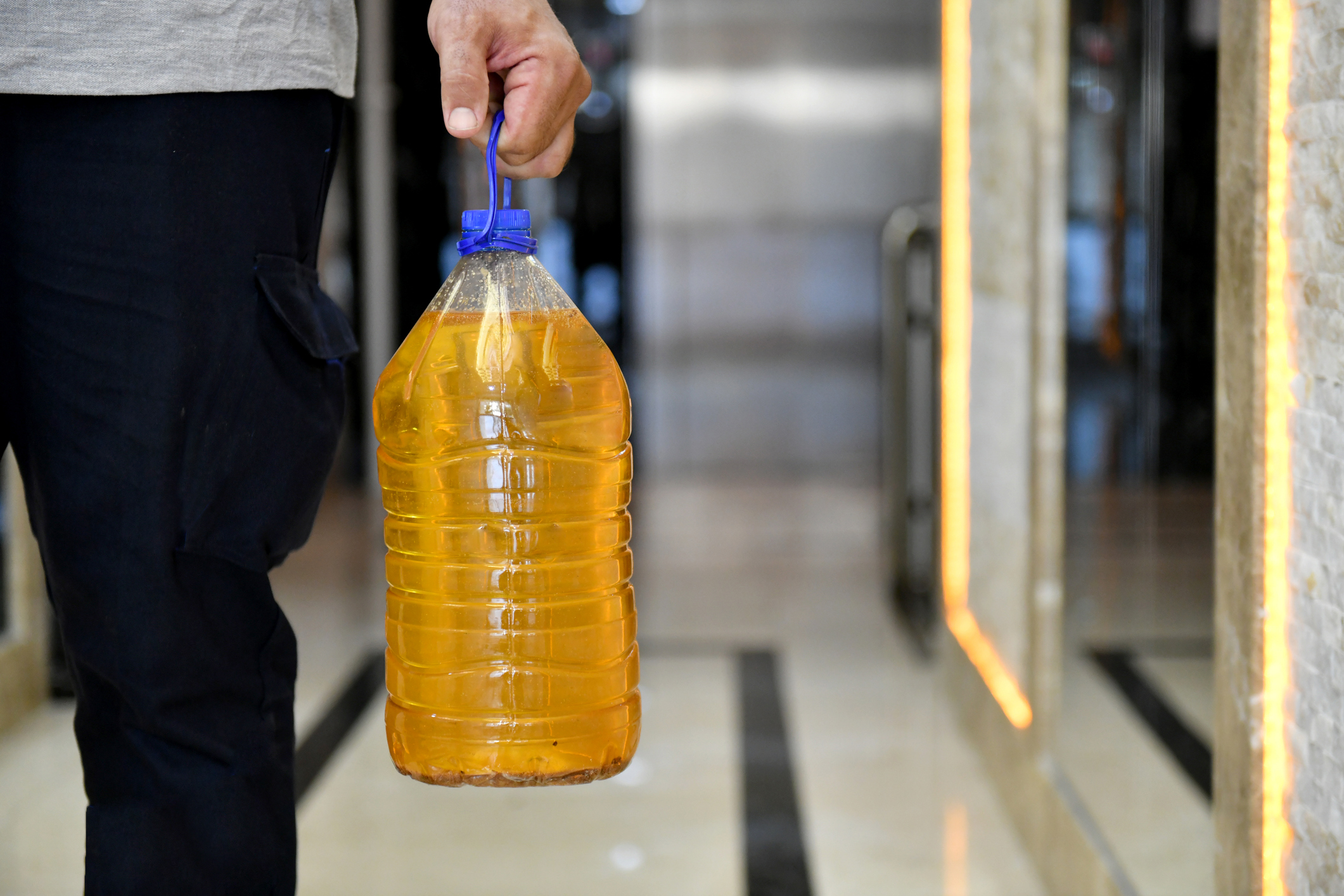
The business should store it securely in a suitable, clearly identified container. The storage arrangement should reduce the risk of spills, leaks, rainwater ingress and accidental mixing.
Waste oil should not be poured into drains, onto the ground or into general waste containers. An oil release can pollute soil, groundwater, rivers and drainage systems.
Businesses should also avoid combining all workshop liquids in one tank.
Waste oil may become more difficult or expensive to recover if it is mixed with:
- Antifreeze
- Brake fluid
- Solvents
- Cleaning chemicals
- Fuel
- Water
- Paint
- Degreasers
- Other unidentified liquids
Even two waste oils may need to remain separate if they come from significantly different applications or contain different contaminants.
Good segregation helps the collector classify the waste and may improve the likelihood that the oil can be recovered rather than sent for a more limited treatment route.
How is waste oil collected?
A registered or otherwise appropriately authorised waste carrier normally collects the oil using a tanker, drum collection vehicle or another suitable system.
Before collection, the carrier may ask the business for information about:
- The type of oil
- The estimated quantity
- The storage container
- The source of the waste
- Known contamination
- Whether other liquids are present
- Access to the collection point
- Any previous analysis or waste classification
The carrier may inspect the material or take a sample before loading it.
This helps reduce the risk of an unknown or unsuitable material contaminating a tanker load. If the collector expects used lubricating oil but finds a mixture containing large quantities of water or solvent, a different collection or treatment arrangement may be needed.
The waste oil is then pumped or transferred into a suitable compartment or container for transport to an authorised site.
What paperwork travels with waste oil?
The paperwork depends on how the waste has been classified and which part of the UK the business operates in.
In England, hazardous waste movements generally require a hazardous waste consignment note. The note must be prepared before the waste is moved and must accompany it until it reaches its destination. Collections of hazardous waste from businesses are included within these requirements.
The documents create a record of:
- Who produced the waste
- Who collected it
- What type of waste was moved
- How much was collected
- Where it was taken
- How it was classified
- Whether it was accepted by the receiving site
Requirements and terminology differ across England, Scotland, Wales and Northern Ireland, so businesses should follow the rules that apply in their nation and obtain appropriate environmental advice where necessary.
The producer should retain the required records. Handing oil to a collector does not remove the business’s responsibility to take reasonable steps to make sure its waste is managed correctly.
Where is collected waste oil taken?
Collected waste oil is normally transported to an authorised transfer, storage or treatment facility.
Some collection businesses operate their own treatment sites. Others deliver the waste to a separate specialist facility.
At arrival, the load may be:
- Weighed
- Checked against its paperwork
- Sampled
- Visually inspected
- Tested
- Assigned to a storage tank
- Accepted or rejected
The receiving facility must determine whether the oil matches the description provided and whether its permit allows it to accept that particular waste.
Waste oil should not automatically be unloaded into a general storage tank. If it contains unexpected contaminants, it could affect a much larger volume of recoverable oil already on site.
Facilities therefore use acceptance procedures to decide where each load should go.
What tests can be carried out on waste oil?
The level of testing depends on the facility and intended treatment route.
Initial checks may assess:
- Water content
- Sediment
- Flash point
- Viscosity
- Density
- Halogens
- Metals
- Fuel content
- Chemical contamination
- General appearance and odour
A laboratory may carry out additional testing where the oil’s identity is uncertain or where specific contaminants could affect treatment.
The results help the facility decide whether the waste oil can be combined with similar loads or needs to remain isolated.
For example, oil with relatively low water and sediment levels may be suitable for one recovery process. A heavily emulsified mixture containing oil, water and cleaning chemicals may require more extensive separation and treatment.
Testing also protects treatment equipment. Unexpected chemicals can create safety risks, interfere with separation processes or cause a recovered product to fail its quality requirements.
Is waste oil mixed together at the treatment facility?
Compatible loads may be combined after they have been accepted and assessed.
This process is sometimes described as bulking.
Bulking allows the facility to collect enough similar material for efficient treatment. However, it should only happen when the loads are compatible and suitable for the same processing route.
The facility may keep separate tanks for:
- Used lubricating oils
- Oily water
- Fuel-contaminated oils
- Different hazardous waste streams
- Material awaiting test results
- Rejected or quarantined loads
- Treated oil
Segregation remains important because one unsuitable delivery can reduce the quality of an entire tank.
The treatment facility therefore relies on both the producer’s description and its own acceptance checks.
How is water removed from waste oil?
Used oil frequently contains water.
Water may have entered through condensation, equipment leaks, outdoor storage, washdown procedures or accidental mixing.
At the treatment site, water can be removed using techniques such as:
- Settlement
- Heating
- Centrifugal separation
- Mechanical separation
- Vacuum dehydration
- Chemical treatment
- Filtration
The specific process depends on the type of oil and the amount of water present.
Simple settlement uses the difference in density between oil, water and solids. Given enough time, heavier water and sediment may move towards the bottom of a tank while oil forms an upper layer.
However, some oil and water mixtures form stable emulsions. These do not separate easily and may require heating or chemical treatment to break the emulsion.
The separated water is not necessarily clean. It may contain oil, metals and other contaminants, so it must undergo further treatment before it can be discharged or sent elsewhere.
How are solids and sludge removed?
Waste oil may contain:
- Metal wear debris
- Carbon
- Dust
- Rust
- Filter material
- Sand
- Seal fragments
- Additive residues
- Tank-bottom sludge
Treatment can use filters, settlement tanks, screens or centrifuges to remove this material.
The resulting sludge is a concentrated waste stream. It cannot normally be returned to the oil or disposed of as ordinary rubbish.
It must be characterised and sent through an appropriate authorised route, which may involve further recovery, treatment or disposal.
This demonstrates why waste-oil recycling does not mean every part of the collected material becomes new oil. The treatment process produces separate outputs, and each output must be managed according to its composition.
Can waste oil be recycled?
Many waste lubricating oils can be recovered, although the final route depends on quality and available treatment infrastructure.
Potential recovery routes include:
- Cleaning and reuse for an appropriate purpose
- Reclamation
- Re-refining into base oil
- Processing into a fuel product
- Use within another authorised recovery process
The waste hierarchy generally favours recovery over disposal where it is technically and environmentally appropriate.
However, an oil contaminated with unsuitable substances may not be capable of following the same route as a well-segregated used lubricant.
The way a business manages oil before collection therefore matters. Keeping it clean and separate can preserve more recovery options.
What is waste-oil reclamation?
Reclamation usually involves removing contaminants so the oil can be used for a further suitable purpose.
Processes may include:
- Heating
- Filtration
- De-watering
- Settlement
- Centrifuging
- Adding replacement additives
The resulting material is not automatically equivalent to a newly manufactured high-performance lubricant.
Its permitted application depends on the treatment completed, quality achieved and relevant product or waste controls.
Some reclaimed oil may be suitable for less demanding industrial purposes rather than returning to its original application.
The destination must be legitimate and technically suitable. Waste should not be described as a usable product merely to avoid waste-management requirements.
What is oil re-refining?
Re-refining is a more extensive process intended to recover useful base oil from used lubricating oil.
Lubricants are originally produced by combining base oils with additive packages. During use, the oil collects contaminants and its additives become depleted, but a proportion of the base-oil material may remain recoverable.
Re-refining can involve several stages, such as:
- Removing water and light fuels.
- Separating solids and degraded material.
- Distillation under controlled conditions.
- Removing unwanted chemical components.
- Refining the recovered oil fractions.
- Testing the resulting base oil.
The recovered base oil can potentially be used as a raw material in lubricant production, subject to its quality and the requirements of the finished product.
Environment Agency guidance recognises re-refining waste oil to produce base lubricating oils as a recovery option.
Re-refining should not be confused with simply filtering used engine oil and putting it back into a vehicle. It is an industrial treatment and refining process.
Can waste oil become a fuel?
Some waste lubricating oil may be processed into a fuel product.
Treatment can remove water, sediment and other contaminants before the recovered oil is used in suitable industrial combustion equipment.
In England and Wales, processed fuel oil produced from waste lubricating oil must meet relevant end-of-waste criteria before it can cease to be regulated as waste. The applicable quality protocol sets requirements for its production and use.
Until the relevant conditions are satisfied, the material remains waste and must continue to be managed under waste controls.
Not every batch of waste oil can become processed fuel oil. The incoming material and final product must meet specified requirements.
Fuel recovery is also different from uncontrolled burning.
Waste oil should never be burned in improvised heaters, open fires or equipment that is not authorised and suitable for the material.
What happens if the oil cannot be recovered?
Some waste oil may be too contaminated for the preferred recycling or recovery routes.
This could happen where it contains:
- High levels of water
- Solvents
- Chlorinated materials
- Heavy contamination
- Mixed chemicals
- Unknown substances
- Persistent emulsions
- Materials that create treatment or safety risks
The facility may send this material for specialist treatment, energy recovery or authorised disposal.
The exact route depends on its classification and composition.
Disposal should generally be the last option after suitable recovery opportunities have been considered. However, forcing heavily contaminated material through an inappropriate recycling process would not be responsible.
The main priority is to protect people and the environment while complying with the facility’s permit and waste-management controls.
What happens to used oil filters?
Oil filters contain both metal or other filter materials and a quantity of residual oil.
They should normally be kept separate from general waste and managed through an appropriate waste route.
Facilities may drain filters to recover the remaining oil before crushing or processing the filter materials. In England, the Environment Agency’s T14 waste exemption can allow eligible sites to empty and crush vehicle waste-oil filters before they are transported for recovery, subject to its conditions.
The drained oil can join a suitable waste-oil treatment stream, while recoverable metal may be sent for recycling.
Filters should be allowed to drain using a controlled process that prevents spills and environmental contamination.
What happens to the collection tanker afterwards?
After unloading, the tanker or collection compartment may need to be inspected or cleaned before carrying another material.
This is particularly important where:
- The previous load was heavily contaminated
- A different waste stream will be collected next
- Residues could affect product quality
- The load contained water or sludge
- The tanker is divided into several compartments
Washings and residues from tanker cleaning become waste and must also be managed correctly.
Collection companies use operating procedures to reduce the risk of cross-contamination between customers and loads.
Can businesses trace what happened to their waste oil?
The producer should receive and retain the required waste documentation.
This provides evidence that the oil was transferred to a particular carrier and destination.
Depending on the service and waste type, records might include:
- A hazardous waste consignment note
- A waste transfer note
- Collection documentation
- Quantity records
- Waste classification details
- Carrier information
- Receiving-site information
- Invoices or account records
The documents do not always provide a detailed description of every treatment stage. Businesses seeking greater assurance can ask their contractor where the oil is taken and what recovery or disposal route is normally used.
They can also check that the collector and receiving site hold the appropriate registrations, permissions or permits.
Does the waste producer remain responsible after collection?
Businesses have a duty of care for the waste they produce.
They should take reasonable steps to ensure that the waste is correctly described, securely stored and passed only to an appropriately authorised person.
They should not assume that responsibility ends as soon as a tanker leaves the premises.
Practical checks include:
- Confirming the collector’s waste-carrier status
- Providing an accurate waste description
- Completing the correct paperwork
- Checking the intended destination
- Keeping required records
- Questioning unusually cheap or unclear disposal offers
- Reporting suspected illegal activity
A contractor offering to remove oil without paperwork or without asking what it contains should be treated cautiously.
Why is separating waste oil important?
Segregation can directly affect what happens after collection.
A clean batch of used lubricating oil may be suitable for recovery. If it is mixed with solvent, coolant or contaminated interceptor waste, the whole mixture may need a more complex and costly treatment route.
Keeping different materials separate can:
- Preserve recycling options
- Reduce treatment costs
- Improve safety
- Make classification easier
- Avoid contaminating larger loads
- Support accurate paperwork
- Reduce the risk of rejected collections
Businesses should label every waste container clearly and prevent employees from using waste-oil tanks as general disposal points.
A locked fill point or controlled access may be appropriate where accidental mixing has previously occurred.
Frequently Asked Questions
Is all waste oil recycled?
No. The final route depends on the oil’s composition, contamination and suitability for treatment. Some oil may be re-refined, reclaimed or processed for fuel, while heavily contaminated material may require specialist treatment or disposal.
Can used engine oil be turned into new engine oil?
Used lubricating oil can be re-refined to recover base oil. That recovered material may then be used as a raw material in new lubricants, provided it meets the necessary quality requirements.
Is waste oil classified as hazardous waste?
Many used automotive and industrial oils are hazardous waste, but the business must classify each waste stream correctly. The classification depends on the oil and the contaminants it contains.
Can a garage mix brake fluid with waste engine oil?
It should not do so unless an authorised waste contractor has specifically confirmed that the materials can share the same collection route. Mixing waste streams can reduce recovery options and create additional hazards.
How long should waste-oil collection records be kept?
Record-retention requirements depend on the type of documentation and the nation in which the business operates. Businesses should follow current environmental guidance and obtain advice where they are uncertain.
Giving waste oil a controlled route after use
After collection, waste oil goes through a structured process rather than being treated as ordinary rubbish.
The collector transports it with the appropriate documentation to an authorised facility, where the load is checked, sampled and assigned to a suitable treatment route. Water, solids and other contaminants may be separated before the recoverable oil is reclaimed, re-refined or processed for another authorised use.
Not every load follows the same journey. The composition and cleanliness of the waste determine what can be recovered.
Garages and industrial sites can support better outcomes by keeping oil separate from solvents, coolant, water and unidentified workshop liquids. Clear storage, accurate classification and the use of authorised waste businesses all help ensure the oil is handled safely and responsibly.
CP Lubricants supplies oils, greases and fluid solutions for industrial, automotive and commercial applications. Explore the lubricant product range or contact the team to discuss your ongoing oil and lubricant supply requirements.
Phone: 023 8033 7800
Email: sales@cplubricants.co.uk
Find out more: CP Lubricants