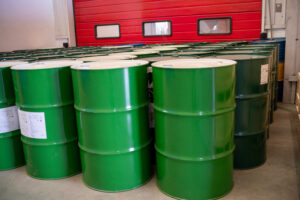
White-label lubricants can meet the same professional performance standards as established branded oils, provided they are formulated, manufactured and verified against the relevant technical requirements. The name printed on the container does not determine whether the lubricant is suitable for an engine, gearbox, hydraulic system or other application.
For garages, lubricant distributors and commercial businesses considering own-brand products, this distinction is important. A lubricant sold under a private label may be manufactured using established formulations and recognised production processes. However, not every white-label product offers the same performance characteristics or holds the same approvals.
The important question is not whether an oil carries a well-known brand name, but whether there is reliable evidence that it meets the requirements of the equipment in which it will be used.
Understanding how lubricant standards, technical documentation and manufacturer approvals work can help businesses distinguish properly specified products from oils supported by little more than marketing claims.
Are white-label lubricants different from established branded oils?
White-label lubricants are products supplied under the branding of a business other than the original manufacturer or formulator.
For example, an automotive parts distributor might sell engine oils carrying its own company name rather than that of a major lubricant manufacturer.
Similarly, an industrial supplier may offer hydraulic oils or gear oils under a private-label range intended for its commercial customers.
The branding arrangement does not necessarily indicate who manufactured the product or how it was formulated.
A white-label lubricant might use an established formulation already sold under another name, or it may be produced to a specification agreed between the customer and lubricant supplier.
These arrangements vary.
Does a different label mean a different formulation?
Not necessarily.
Two products carrying different brand names may use the same or closely related formulations.
Conversely, two oils presented as equivalent products may have significant technical differences.
For example, two SAE 5W-30 engine oils might be suitable for different vehicle manufacturers because their additive formulations and performance specifications are not identical.
The fact that both are labelled 5W-30 establishes only part of their technical characteristics.
The same principle applies to industrial lubricants.
Two ISO VG 46 hydraulic oils may share a viscosity classification but differ in their additive systems, performance requirements or suitability for particular equipment.
Businesses should therefore avoid assuming that white-label products are either inferior or directly equivalent to recognised brands without reviewing the technical evidence.
Can white-label lubricants use established formulations?
Yes. Private-label lubricant arrangements can involve existing formulations that have been developed and evaluated for particular applications.
This can allow a business to sell products under its own branding without developing an entirely new lubricant from the beginning.
However, the performance characteristics of the finished product must still be supported by appropriate documentation.
A supplier offering white-label lubricants should be able to explain which specifications apply and provide evidence relevant to the product being supplied.
Which professional performance standards apply to white-label lubricants?
There is no single performance standard that covers every type of lubricant.
The appropriate requirements depend on whether the product is intended for automotive engines, industrial gearboxes, hydraulic equipment or another application.
A private-label engine oil might need to meet recognised automotive performance classifications and specific vehicle manufacturer requirements.
An industrial hydraulic oil may instead need to satisfy relevant hydraulic fluid specifications.
This distinction is important because the statement “meets industry standards” is too broad to establish whether a product is appropriate for a particular machine.
What standards apply to automotive engine oils?
Automotive engine oils are commonly assessed using industry performance classifications and manufacturer specifications.
Recognised systems include those developed by the European Automobile Manufacturers’ Association (ACEA) and the American Petroleum Institute (API).
ACEA oil sequences establish performance requirements for different categories of petrol and diesel engines, including applications involving exhaust aftertreatment equipment.
API also defines engine oil performance categories and operates a licensing and certification system for qualifying products.
These systems are relevant to white-label lubricants because the applicable performance requirements do not depend on whether the oil carries a major manufacturer’s brand.
A correctly formulated own-brand oil can potentially meet the same classification as a branded alternative.
However, the claim must be supported by the appropriate technical evidence.
European Automobile Manufacturers’ Association
+1
What standards apply to industrial hydraulic oils?
Industrial hydraulic oils are commonly specified using ISO viscosity grades and performance standards relevant to hydraulic fluid applications.
For example, ISO VG 32, 46 and 68 identify viscosity classifications frequently encountered in industrial hydraulic systems.
However, viscosity alone does not establish full suitability.
Depending on the equipment, manufacturers may require particular wear protection, oxidation stability, corrosion resistance or material compatibility.
An own-brand hydraulic oil should therefore be assessed against the complete technical specification required by the machinery.
The same principle applies to industrial gear oils, where viscosity, load-carrying performance and compatibility with gearbox materials can all influence product selection.
A supplier should be able to identify which standards the lubricant is intended to meet and explain any limitations.
How are lubricant performance claims tested and verified?
A professionally specified lubricant needs evidence supporting its performance claims.
Depending on the product and application, this may involve laboratory testing, recognised industry test methods, formulation controls and manufacturer approval procedures.
Testing is particularly important because a lubricant’s appearance provides very little information about its technical performance.
Two oils may look identical while behaving differently under high temperatures, heavy loads or prolonged operating conditions.
What do lubricant tests measure?
Different tests assess different product characteristics.
These can include:
- Viscosity and viscosity behaviour at different temperatures.
- Resistance to oxidation and deterioration.
- Wear protection and load-carrying performance.
- Corrosion protection.
- Foaming characteristics and air release.
- Compatibility with relevant materials and equipment requirements.
Not every lubricant requires every test.
The appropriate testing programme depends on the product category and the performance claims being made.
For example, engine oils may be subjected to recognised engine tests intended to assess wear, deposits and other performance characteristics.
Industrial hydraulic fluids are assessed using different methods relevant to hydraulic equipment.
Does white-label oil need independent testing?
The precise testing obligations depend on the specifications and approvals being claimed.
Some performance standards require particular test methods and supporting evidence, while other product characteristics may be assessed through established formulation and quality control procedures.
Businesses should not assume that every white-label product has been independently tested as a complete finished formulation simply because its technical data sheet references an industry standard.
It is reasonable to ask what evidence supports the stated claims and whether that evidence applies to the actual product being supplied.
This is especially important when a supplier describes an oil as equivalent to a specific branded product.
Technical equivalence should be supported by performance requirements rather than simply comparing appearance, viscosity or general application descriptions.
What is the difference between meeting a specification and holding manufacturer approval?
This is one of the most important distinctions when assessing white-label lubricant quality.
Product documentation may state that an oil meets a particular performance specification, is recommended for certain applications or has received formal approval from an equipment manufacturer.
These statements are not necessarily equivalent.
Meeting an industry specification
A lubricant supplier may claim that a product meets an established industry specification based on the appropriate development, testing and supporting evidence.
For example, an engine oil may claim compliance with a particular ACEA performance category.
ACEA does not operate a conventional product approval or certification scheme. Instead, oil marketers are responsible for substantiating compliance with the applicable requirements, including the relevant testing and quality management provisions.
acea.auto
Therefore, an ACEA performance claim should not be described as an ACEA manufacturer approval.
Holding formal approval
Some engine and equipment manufacturers operate formal lubricant approval systems.
Where a product has received approval, the claim should be supported by appropriate documentation and, where available, a current manufacturer approval listing.
An oil described as suitable for an engine is not necessarily the same as one holding the manufacturer’s formal approval.
A business considering white-label engine oil should establish which applies.
What about API certification?
API operates a licensing system that permits qualifying engine oils to carry its recognised quality marks.
The relevant oil marketer must obtain the appropriate licence before using those marks or describing a product as API licensed or certified.
This is particularly important for businesses selling private-label engine oils. Rebranding an oil does not automatically authorise the new brand to display API certification marks.
API
A distributor should confirm that the finished own-brand product and its proposed labelling are covered by the relevant licensing arrangements.
What documentation should businesses request from a white-label lubricant supplier?
Technical documentation is one of the most useful ways to assess whether a white-label lubricant is appropriate for professional use.
A supplier should be able to provide information explaining the product’s intended applications, performance characteristics and relevant precautions.
The most important documents will vary depending on the type of lubricant and the specifications claimed.
Technical data sheets
A technical data sheet describes the product’s characteristics and intended applications.
For an engine oil, this might include its viscosity grade, relevant performance classifications and manufacturer approvals or recommendations.
For an industrial lubricant, the document may include viscosity measurements, performance characteristics and applicable industrial specifications.
However, a technical data sheet is not necessarily proof that every claimed approval has been independently verified.
Where an approval is particularly important, additional confirmation may be necessary.
Safety data sheets
Safety data sheets provide information about hazards, handling, storage and other safety considerations.
They help businesses assess how products should be managed in the workplace.
However, an SDS should not be confused with evidence of lubricant performance.
An oil may have complete safety documentation without meeting the technical requirements of a particular engine or gearbox.
Batch information and traceability
For businesses selling lubricants under their own name, product traceability is another important consideration.
A suitable arrangement should allow products to be identified through relevant batch or production information.
This can help investigate complaints, identify affected stock and manage any necessary corrective action.
Before entering a supply agreement, businesses should establish who maintains production records and how enquiries about individual batches would be handled.
A practical documentation checklist
| Documentation | What it helps establish |
|---|---|
| Technical data sheet | Product characteristics and stated performance specifications |
| Safety data sheet | Hazard information and safe handling requirements |
| Manufacturer approval evidence | Whether specific formal approvals are held |
| Industry certification or licensing evidence | Whether relevant marks and certification claims are authorised |
| Batch identification | Product traceability |
| Product label information | Correct identification, claims and handling information |
Receiving documents is only the first step.
Businesses should check that they refer to the exact product and formulation being purchased, rather than a similar product elsewhere in the supplier’s range.
Can a white-label lubricant be suitable without holding every manufacturer approval?
Yes, although the answer depends on the intended application.
Some machinery manufacturers specify lubricant characteristics or industry classifications without requiring a particular proprietary approval.
In these circumstances, an appropriately formulated lubricant that meets the stated requirements may be suitable.
Other manufacturers specify formal approvals or particular products.
Where these are mandatory requirements, a product without the necessary approval should not automatically be substituted.
For example, consider a garage planning to introduce a white-label engine oil.
The product may meet a recognised ACEA category and have the correct SAE viscosity grade.
However, if the vehicles being serviced require a specific manufacturer approval that the lubricant does not hold, the garage needs to investigate that difference before treating it as suitable.
The same principle applies to industrial equipment.
An industrial gearbox may require an oil meeting particular performance and compatibility requirements. A product should be selected against those requirements rather than relying on general claims of professional quality.
Professional suitability is application-specific, not a universal status attached to a lubricant brand.
What quality risks should businesses consider when developing own-brand lubricants?
Launching an own-brand range creates responsibilities that extend beyond selecting attractive packaging.
Customers need confidence that the product they purchase is consistent with its stated specification.
Several practical considerations can affect that confidence.
Consistency between production batches
Once a suitable formulation has been selected, businesses need assurance that subsequent deliveries maintain the required performance characteristics.
Changes in raw materials, manufacturing arrangements or formulations may require assessment to establish whether existing performance claims remain valid.
Businesses should discuss how formulation changes are controlled and communicated.
Product substitutions
If a supplier cannot provide the original formulation, an alternative should not be introduced automatically under the existing product name.
Even where products appear similar, their technical characteristics or approvals may differ.
A substitution may also require changes to labels, technical documentation or customer recommendations.
This is particularly important when customers have already approved an oil for use in their equipment.
Packaging and product identification
White-label packaging needs to communicate accurate technical information.
Prominent branding should not obscure the product specification, viscosity grade or relevant safety information.
In Great Britain, lubricants classified as hazardous mixtures may require labelling under applicable GB CLP requirements. Businesses should establish which obligations apply to the particular formulation and packaging arrangement.
HSE
Clear labelling also helps garages and industrial users distinguish between products that may have similar names or packaging.
For example, a distributor selling several 5W-30 engine oils should ensure customers can identify the correct product specification rather than assuming every container is interchangeable.
How should businesses compare branded and white-label lubricants?
Comparing lubricants solely on price or brand recognition does not provide enough information to establish technical suitability.
A more useful comparison examines the actual specification required and the evidence available for each product.
Consider a hypothetical commercial workshop evaluating two engine oils.
The first is supplied under an established lubricant brand. The second carries the workshop distributor’s own label.
Both have the same viscosity grade.
That similarity alone does not establish equivalence.
The buyer should examine their performance classifications, relevant manufacturer approvals and supporting technical information.
If both products genuinely meet all requirements for the intended application, the business can then consider other factors such as packaging, availability and purchasing cost.
However, if one product lacks a required approval, a lower price does not compensate for the technical difference.
This approach also works for industrial oils and greases.
For instance, two hydraulic oils may appear suitable for general industrial use, but only one might satisfy the requirements of a particular hydraulic pump.
The correct choice is determined by the equipment requirements and product evidence, not by whether the label belongs to a major international manufacturer.
What should businesses establish before introducing a white-label range?
A business considering private-label lubricants should start by identifying the products its customers actually need.
A garage supplier concentrating on passenger vehicles may require several different engine oil specifications.
An industrial distributor might instead need hydraulic oils, gear oils and greases suitable for a range of machinery applications.
Attempting to cover every possible requirement with a small number of general-purpose products can create compatibility problems.
The initial product range should be shaped by the intended applications and the relevant technical requirements.
Assess the applications first
Before selecting a formulation, establish which engines, machines or equipment categories the product is intended to serve.
For automotive lubricants, this means identifying the relevant vehicle manufacturer requirements and performance specifications.
For industrial lubricants, it involves understanding the machinery type, operating conditions and required standards.
This information should guide discussions with the white-label supplier.
Confirm the formulation and performance claims
Once a potential product has been identified, review the technical documentation.
Establish which specifications it meets, which approvals it holds and whether any claims require further verification.
Where the lubricant is intended to replace an existing product, evaluate the differences rather than assuming equivalence.
Agree how product changes will be managed
Businesses should also establish arrangements for maintaining consistency.
A useful supply agreement should clarify how product information is updated, how formulation changes are communicated and which organisation is responsible for relevant quality and documentation processes.
For an own-brand lubricant business, these arrangements can be just as important as the initial product selection.
How can CP Lubricants support technically suitable own-brand products?
CP Lubricants offers own-brand and white-label lubricant supply for resellers and commercial customers.
Its service includes discussing the intended application, sourcing appropriate products and reviewing requirements for customer-branded packaging.
The company’s technical department can also assess specialist lubricant requirements where a suitable product is not available within its existing range.
This is relevant because white-label product development should begin with the required technical characteristics rather than the branding.
For example, a distributor planning a private-label hydraulic oil range should first identify the relevant industrial applications and performance requirements.
The packaging and product branding can then be considered alongside the selected formulation.
CP Lubricants can discuss product specifications, technical documentation, packaging requirements and repeat-order arrangements with customers considering own-brand supply.
The availability of particular formulations, approvals and packaging options should be confirmed for the individual product rather than assumed to apply across an entire range.
Frequently Asked Questions
Are white-label lubricants lower quality than branded oils?
Not inherently. Lubricant quality depends on formulation, manufacturing controls and verified performance characteristics. A white-label product can meet recognised specifications, but its suitability should be assessed using technical evidence rather than branding.
Can own-brand engine oils meet ACEA specifications?
Yes. Own-brand engine oils can claim compliance with applicable ACEA oil sequences when the required performance evidence and quality management provisions support those claims. ACEA does not itself issue conventional product approvals.
Can private-label lubricants carry API certification marks?
Potentially, provided the relevant licensing requirements are satisfied. Businesses must not assume that an existing formulation’s licensing automatically permits a different brand to display API marks.
Can a white-label lubricant be used during a vehicle’s warranty period?
Potentially, if it meets the applicable manufacturer requirements. Where a specific approval is required, that should be verified. The vehicle’s warranty conditions and servicing guidance should be checked before use.
Is an own-brand lubricant’s technical data sheet enough to prove quality?
A technical data sheet is an important starting point, but it does not necessarily establish that every performance claim has been independently verified. Additional approval, testing or certification evidence may be needed depending on the application.
Can White-Label Lubricants Deliver Professional Performance?
White-label lubricants can meet recognised professional standards, but the evidence supporting their performance matters more than the name displayed on the container.
A suitable product should be selected according to its intended application, relevant industry specifications and any required manufacturer approvals.
Businesses should also consider the quality of technical documentation, consistency between production batches and the accuracy of product labelling.
For garages, distributors and industrial buyers, this creates a straightforward principle: evaluate the lubricant as a technical product first and a branded product second.
CP Lubricants supplies own-brand and white-label lubricant solutions for commercial and professional applications. Its technical team can help businesses discuss product specifications, sourcing requirements and suitable packaging arrangements.
For more information about developing an own-brand lubricant range or assessing product requirements, contact CP Lubricants.
Phone: 023 8033 7800
Email: sales@cplubricants.co.uk
Find out more: https://cplubricants.co.uk/