Oil analysis can reduce maintenance costs when it is used properly as part of a wider planned maintenance strategy. For businesses operating industrial machinery, commercial vehicles, hydraulic systems, gearboxes or heavy equipment, oil analysis provides useful information about lubricant condition, contamination and component wear. Instead of relying only on fixed service intervals or waiting for visible problems, maintenance teams can use oil data to make more informed decisions.
This does not mean oil analysis is a magic solution for every machine or every business. It works best when there is a clear reason for testing, consistent sampling, good record keeping and a willingness to act on the results. Used correctly, it can help identify developing faults earlier, avoid unnecessary oil changes, reduce downtime and improve long-term equipment reliability.
For businesses that depend on machinery every day, this can have real value. A small issue found early through oil analysis may be far cheaper to address than a major component failure discovered after a breakdown.
What is oil analysis?
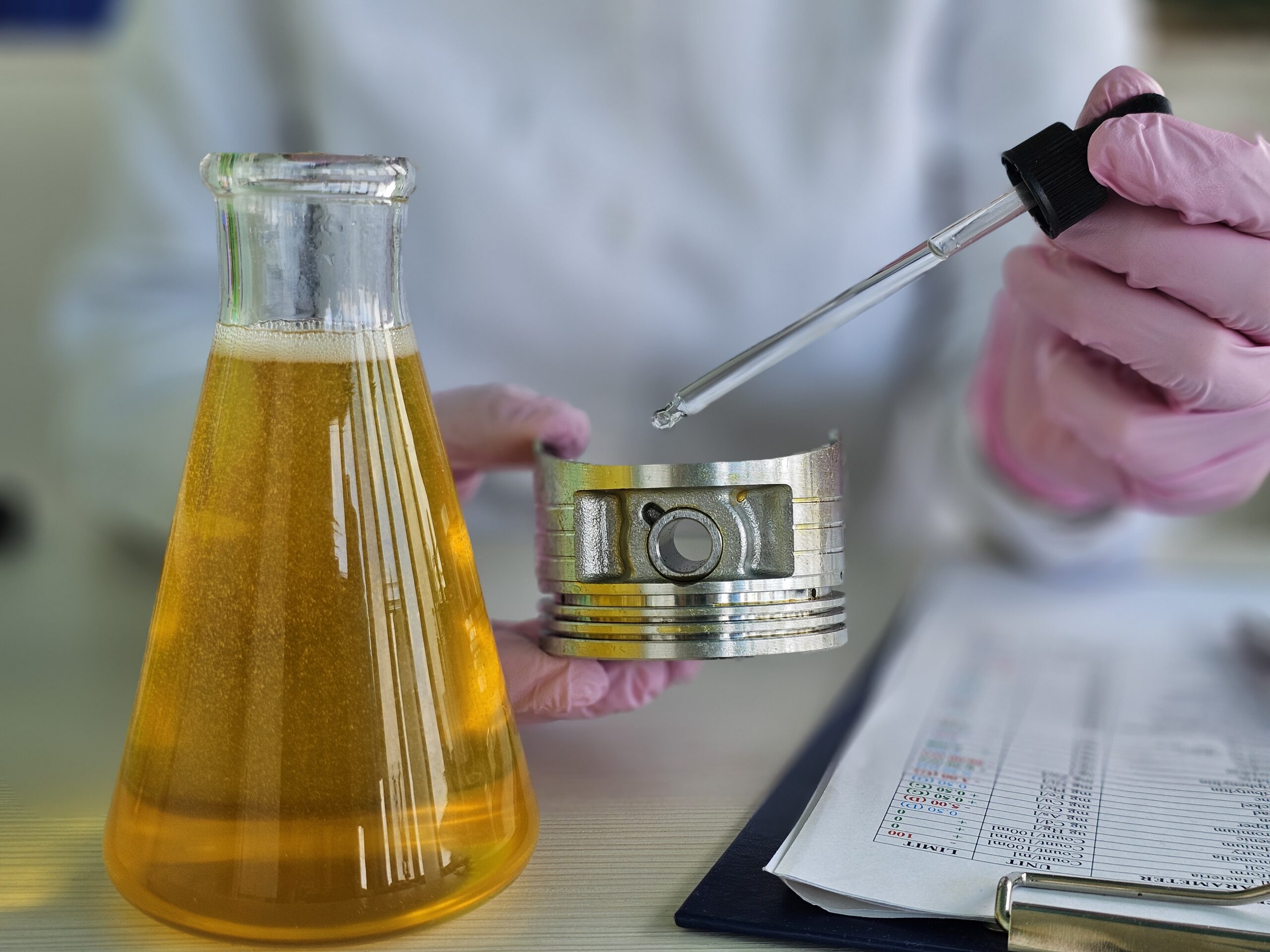
Oil analysis is the process of testing a lubricant sample to assess both the condition of the oil and the condition of the equipment it is protecting. The sample is usually taken from a machine, engine, gearbox, hydraulic system or other lubricated component, then tested for signs of wear, contamination and oil degradation.
The exact tests can vary depending on the equipment and lubricant type. Common checks may include viscosity, water content, particle contamination, oxidation, acidity, additive condition and wear metals. These results can help show whether the oil is still suitable for continued use and whether the machine is operating normally.
Oil analysis is often compared to a blood test for machinery. The lubricant carries information about what is happening inside the system. If the oil contains abnormal levels of metal particles, dirt, water or degraded additives, it may indicate a developing problem.
The value of oil analysis is not just in receiving a laboratory report. The value comes from interpreting the results in context and using them to make better maintenance decisions. This is why testing should be linked to machinery history, operating conditions and maintenance records.
How can oil analysis reduce maintenance costs?
Oil analysis can reduce maintenance costs by helping businesses move from reactive maintenance to more informed maintenance. Reactive maintenance means responding after something has already gone wrong. This can be expensive because breakdowns often cause downtime, emergency repairs, lost production and secondary damage.
Oil analysis supports earlier decision-making. It can reveal warning signs before a machine fails. For example, increasing iron levels in oil may indicate abnormal wear. Water contamination may suggest a sealing issue or poor storage practice. A drop in viscosity may indicate fuel dilution, product mixing or lubricant breakdown. High particle levels may point to filtration or cleanliness problems.
By identifying these issues early, maintenance teams may be able to carry out a controlled repair during planned downtime instead of dealing with an unexpected failure during production. Planned work is usually easier to schedule, easier to cost and less disruptive.
Oil analysis may also reduce unnecessary maintenance. If results show that oil is still in good condition, a business may be able to avoid changing it too early, where this is appropriate and safe. This can reduce oil consumption, waste oil handling and labour time.
What types of problems can oil analysis detect?
Oil analysis can help detect a range of problems that may not be visible during routine inspection. Many internal machinery issues develop gradually, and the lubricant can carry early evidence of those changes.
Common issues oil analysis may reveal include:
- abnormal component wear
- dirt, dust or particle contamination
- water contamination
- coolant or fuel dilution in engines
- oxidation or thermal stress
- incorrect viscosity
- additive depletion
- oil mixing or incorrect lubricant use
- filtration problems
- corrosion risk
These findings can help maintenance teams decide whether to inspect the equipment, change the oil, improve filtration, investigate storage practices or review the lubricant specification.
For example, if a hydraulic system shows high particle contamination, the immediate problem may not be the oil itself. The issue could relate to seals, breathers, dirty transfer equipment or poor storage. Oil analysis gives the business a starting point for investigation.
Can oil analysis prevent breakdowns?
Oil analysis can help prevent some breakdowns, but it cannot prevent every failure. Its strength is in identifying problems that leave evidence in the lubricant. Wear, contamination and oil degradation are all areas where analysis can provide useful insight.
However, not all failures are oil-related, and some mechanical failures happen suddenly. A cracked component, electrical fault or operator error may not be predicted by oil testing. This is why oil analysis should be used alongside other maintenance practices such as inspections, vibration monitoring, temperature checks and good servicing routines.
The realistic benefit is risk reduction. Oil analysis improves the chance of spotting certain issues before they become serious. For critical machinery, this can be enough to justify the cost of testing. Avoiding one major gearbox failure, hydraulic pump failure or engine issue may save far more than the cost of a sampling programme.
How oil analysis supports planned maintenance
Planned maintenance is about carrying out work at the right time. If maintenance is done too late, equipment can fail. If it is done too early, businesses may waste oil, parts and labour. Oil analysis can help find a better balance.
A fixed oil change interval is simple, but it does not always reflect real operating conditions. Two identical machines may experience different loads, temperatures, contamination levels or duty cycles. One machine may degrade its oil faster than expected, while another may still have usable oil at the scheduled change point.
Oil analysis provides evidence. It helps maintenance teams understand whether a lubricant is still performing properly or whether the machine needs attention sooner than planned.
This is particularly useful for:
- expensive machinery
- critical production equipment
- high-value gearboxes
- hydraulic systems
- fleets with heavy usage
- machinery operating in harsh conditions
- equipment with a history of recurring problems
In these situations, oil analysis can help maintenance teams prioritise work and avoid making decisions based purely on assumptions.
Can oil analysis extend lubricant life?
Oil analysis can help businesses extend lubricant life where the oil remains in good condition and continued use is suitable for the equipment. This can reduce oil purchasing costs, waste oil disposal needs and labour time for oil changes.
However, oil life should never be extended casually. The decision must be based on reliable test results, equipment requirements and operating conditions. If oil is contaminated, oxidised, degraded or outside specification, keeping it in service can increase wear and risk.
The main advantage is avoiding unnecessary oil changes. Some businesses change oil on a strict calendar basis even when the lubricant may still be performing effectively. In other cases, harsh conditions may mean oil should be changed sooner. Oil analysis helps distinguish between the two.
For larger systems with high oil volumes, extending oil life safely can make a significant difference. A hydraulic system, large gearbox or circulating oil system may contain a considerable amount of lubricant. Changing that oil too early can be costly. Testing helps support a more evidence-based approach.
Reducing downtime through early intervention
Downtime is often one of the biggest maintenance costs, especially in industrial and commercial environments. The direct repair bill is only part of the picture. A breakdown may stop production, delay orders, affect customer commitments, require emergency call-outs or put pressure on other equipment.
Oil analysis can reduce downtime by giving businesses earlier warning of developing problems. If the results show abnormal wear or contamination, maintenance can be scheduled before the issue becomes critical.
A real-world example might be a gearbox that is still operating but showing rising levels of wear metals in the oil. Without testing, the first sign of trouble may be noise, vibration or failure. With testing, the maintenance team has a chance to inspect the gearbox, check alignment, review load conditions or plan repairs before serious damage occurs.
This does not remove the need for mechanical investigation, but it gives the team useful evidence to act earlier.
Improving component life
Good lubrication helps protect components. Poor lubrication, contamination or degraded oil can shorten the life of bearings, gears, pumps, engines and hydraulic components. Oil analysis helps identify when that protection may be compromised.
For example, water in oil can reduce lubrication performance and increase corrosion risk. Dirt particles can cause abrasive wear. Incorrect viscosity can affect film strength and system efficiency. Additive depletion can reduce the lubricant’s ability to protect against oxidation, wear or corrosion.
By identifying these problems, oil analysis helps maintenance teams correct the cause. That might involve changing the lubricant, improving storage, replacing breathers, improving filtration, repairing seals or reviewing maintenance practices.
Longer component life can reduce replacement costs and improve equipment availability. For businesses with expensive machinery, this can be one of the strongest reasons to use oil analysis.
Helping businesses avoid incorrect lubricant use
Oil analysis can also help identify cases where the wrong oil has been used or products have been mixed. This can happen more easily than many businesses realise, especially on sites with multiple lubricants, unlabelled containers or several staff involved in maintenance.
Signs of incorrect lubricant use may include unexpected viscosity changes, additive differences or unusual performance results. If the wrong oil is used in a gearbox, hydraulic system or engine, the equipment may not receive the protection it needs.
Preventing incorrect lubricant use is not only about testing. It also requires clear product labelling, staff training, proper storage and suitable dispensing equipment. However, oil analysis can help reveal when something has gone wrong and prompt a review of handling practices.
When is oil analysis worth the cost?
Oil analysis is most worthwhile where the cost of failure is high, the equipment is critical, the oil volume is significant or the operating conditions are demanding. It may not be necessary for every small machine or low-risk application.
Businesses should consider oil analysis when:
- machinery failure would cause costly downtime
- equipment repairs are expensive
- oil volumes are high
- there are recurring reliability issues
- lubricant life is uncertain
- contamination is a known risk
- maintenance intervals are being reviewed
- operating conditions are severe
- there is a need to monitor fleet or machinery condition
The decision should be based on value, not just test cost. A low-cost test may be worthwhile if it helps prevent a major repair. Equally, testing without a clear plan may not deliver useful results.
Why consistent sampling matters
Oil analysis is most useful when results can be compared over time. One sample gives a snapshot, but repeated samples create a trend. Trends help show whether wear levels are stable, contamination is increasing or oil condition is changing faster than expected.
Sampling should be consistent. Samples should ideally be taken from the same point, under similar operating conditions and at planned intervals. If sampling methods vary too much, results may be harder to interpret.
Good records are essential. Maintenance teams should keep track of oil changes, top-ups, repairs, filter changes, operating hours and any unusual events. Without context, a laboratory report can be difficult to use properly.
The goal is to build a clearer picture of machinery health and lubricant performance over time.
What happens if oil analysis results are ignored?
Oil analysis only reduces costs when the results are acted upon. If a report shows contamination, abnormal wear or degraded oil and nothing is done, the business gains very little.
Ignoring oil analysis findings can create a false sense of security. Testing may show that there is a problem, but the machinery may still fail if the cause is not addressed.
A good oil analysis process should include clear responsibility. Someone should review the report, compare it with previous results, decide whether action is needed and record what was done. This closes the loop between testing and maintenance.
Frequently Asked Questions
Is oil analysis only for large industrial businesses?
No. Oil analysis can be useful for smaller businesses too, especially where machinery is expensive, heavily used or important to daily operations. The value depends on the cost of failure and the usefulness of the information gained.
How often should oil analysis be carried out?
The right frequency depends on the equipment, operating conditions and maintenance strategy. Critical machinery may need regular sampling, while lower-risk equipment may only need periodic checks or testing when a problem is suspected.
Can oil analysis replace regular servicing?
No. Oil analysis supports servicing, but it does not replace good maintenance. It should be used alongside inspections, correct lubrication, filter changes, manufacturer guidance and planned maintenance routines.
Does oil analysis always mean oil can be used for longer?
No. Sometimes oil analysis shows that oil should be changed sooner. It may also identify contamination or wear that requires investigation. Extending oil life should only be considered when test results support it.
What is the biggest benefit of oil analysis?
The biggest benefit is better information. Oil analysis helps businesses make maintenance decisions based on evidence rather than guesswork. This can reduce unnecessary oil changes, identify problems earlier and support more reliable equipment operation.
Oil analysis can reduce maintenance costs by helping businesses detect problems earlier, avoid unnecessary oil changes, improve component life and plan maintenance more effectively. It is most valuable when used consistently and when the results are acted upon.
For industrial businesses, fleet operators and maintenance teams, oil analysis can provide useful insight into both lubricant condition and machinery health. It will not prevent every failure, but it can reduce risk and support better decisions.
For support with lubricant selection, oil supply and product guidance, contact CP Lubricants.
Phone: 023 8033 7800
Email: sales@cplubricants.co.uk
Find out more: https://cplubricants.co.uk/
Want to know more? Get in touch
Find us on Google Maps