Hydraulic oil is the lifeblood of any hydraulic system. It transmits power, lubricates components and protects against wear, corrosion and overheating. Without proper maintenance, even the best hydraulic oil will degrade, leading to reduced performance and costly failures.
For industrial businesses, poor hydraulic oil management often results in downtime, increased repair costs and reduced equipment lifespan. Understanding how to maintain hydraulic oil correctly can significantly improve reliability and efficiency.
This guide explains the key factors that affect hydraulic oil performance and the best practices for extending its service life.
Why Hydraulic Oil Maintenance Matters
Hydraulic systems rely on clean, stable oil to function effectively. When oil degrades or becomes contaminated, the entire system is affected.
Poor maintenance can lead to:
- Reduced efficiency and power loss
- Increased component wear
- Overheating and system instability
- Valve and pump failure
In high-demand industrial environments, these issues can quickly escalate into major operational problems.
What Causes Hydraulic Oil to Break Down?
Hydraulic oil does not fail randomly. Its condition is directly influenced by how it is used and maintained.
Heat and Oxidation
High temperatures accelerate oxidation, causing the oil to thicken and lose its protective properties. Over time, this leads to sludge formation and reduced efficiency.
Contamination
Contaminants are one of the biggest threats to oil performance. These include:
- Dust and dirt entering the system
- Water contamination from condensation or leaks
- Metal particles from component wear
Even small amounts of contamination can cause significant damage.
Additive Depletion
Hydraulic oil contains additives that provide anti-wear protection, corrosion resistance and stability. As these additives are used up, the oil becomes less effective.
Air Ingress
Air entering the system can lead to foaming and cavitation, reducing lubrication and increasing wear on components.
Key Maintenance Practices to Extend Hydraulic Oil Life
Proper maintenance is essential to maximise the lifespan of oil and protect equipment.
Regular Oil Monitoring
Routine checks help identify issues before they become serious problems.
Look for:
- Changes in colour or clarity
- Unusual smells
- Signs of contamination
Filtration and Cleanliness
Maintaining clean oil is critical. High-quality filtration systems remove contaminants and help extend oil life.
Best practices include:
- Using appropriate filters for the system
- Replacing filters at recommended intervals
- Keeping reservoirs sealed to prevent contamination
Temperature Control
Excessive heat is a major cause of oil degradation. Ensuring proper cooling helps maintain oil stability.
This may involve:
- Monitoring operating temperatures
- Maintaining cooling systems
- Avoiding overload conditions
Scheduled Oil Changes
While extending oil life is important, it still needs to be replaced at the right time.
Intervals vary depending on:
- Operating conditions
- Equipment type
- Oil quality
Condition-based monitoring is often more effective than fixed schedules.
Oil Analysis: The Most Effective Maintenance Tool
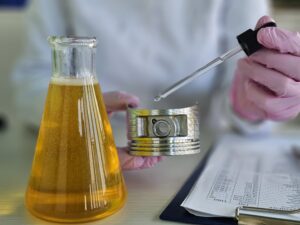
Oil analysis provides a detailed understanding of oil condition.
Testing can reveal:
- Contamination levels
- Viscosity changes
- Presence of wear metals
- Remaining additive life
This allows maintenance teams to make informed decisions rather than relying on guesswork.
For further insight into lubrication science, the principles of Tribology explain how oil interacts with surfaces under load.
Real-World Scenario: Construction Equipment
A construction company operating hydraulic excavators experienced frequent pump failures. Initially, components were replaced without addressing the root cause.
Oil analysis revealed high levels of contamination due to inadequate filtration.
After improving maintenance practices:
- Oil life was extended
- Equipment reliability improved
- Maintenance costs were reduced
This demonstrates the direct impact of proper oil management.
What Happens If Hydraulic Oil Is Not Maintained?
Neglecting oil maintenance can lead to a cascade of issues.
Early Warning Signs
- Sluggish system response
- Increased noise or vibration
- Rising operating temperatures
Long-Term Consequences
- Pump and valve failure
- Internal corrosion
- System contamination spreading
- Complete system breakdown
In industrial operations, these failures can halt production and require expensive repairs.
Good, Better, Best: Hydraulic Oil Maintenance Approach
Choosing the right level of maintenance depends on the importance of the equipment.
Good
- Basic visual checks and scheduled oil changes
- Suitable for low-demand systems
Better
- Regular inspections with improved filtration and temperature control
- Balanced approach for most industrial applications
Best
- Full condition monitoring with oil analysis
- Preventative maintenance based on real data
- Ideal for critical or high-value equipment
Common Mistakes to Avoid
Even with good intentions, maintenance errors can reduce hydraulic oil effectiveness.
Avoid:
- Ignoring contamination sources
- Using incorrect hydraulic oil specifications
- Overlooking filter maintenance
- Allowing systems to overheat
- Delaying oil changes too long
Each of these can shorten oil life and increase the risk of failure.
Frequently Asked Questions
Q1: How often should hydraulic oil be changed?
It depends on usage and conditions. Many systems benefit from condition-based monitoring rather than fixed intervals.
Q2: What is the biggest threat to hydraulic oil?
Contamination is the most common and damaging issue, followed by excessive heat.
Q3: Can hydraulic oil last indefinitely with good maintenance?
No. While maintenance extends lifespan, oil will eventually degrade and require replacement.
Q4: What are the signs of contaminated hydraulic oil?
Cloudiness, unusual colour, increased wear and reduced system performance are key indicators.
Q5: Is synthetic hydraulic oil better?
In many cases, yes. It offers improved stability, longer life and better performance under extreme conditions.
Summary
Hydraulic oil maintenance is essential for keeping systems running efficiently and preventing costly failures. By controlling contamination, managing temperature and monitoring oil condition, businesses can significantly extend equipment life.
Investing in proper maintenance practices not only protects machinery but also improves operational reliability and reduces long-term costs.
For expert advice and a reliable supply of high-performance hydraulic oil tailored to your application, contact CP Lubricants.
Phone: 023 8033 7800
Email: sales@cplubricants.co.uk
Find out more: https://cplubricants.co.uk/
Want to know more? Get in touch
Find us on Google Maps