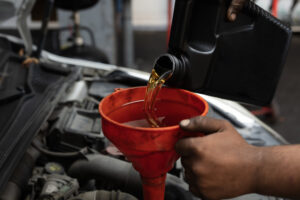
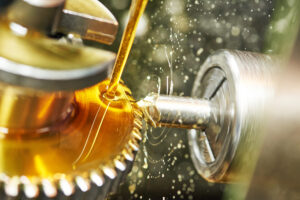
Gear oil is essential for protecting gears, bearings and moving components in industrial machinery. It reduces friction, prevents wear and helps manage heat under heavy loads. However, even the highest quality gear oil does not last forever.
Knowing when to replace gear oil is critical. Leaving it too long can lead to equipment damage, reduced efficiency and unexpected downtime. Changing it too frequently, on the other hand, increases costs without adding value.
This guide explains how to identify the right replacement intervals, what affects gear oil lifespan and how to avoid costly mistakes.
Why Gear Oil Degrades Over Time
Gear oil operates under demanding conditions, especially in industrial environments where machinery runs continuously or under heavy loads.
Over time, it begins to degrade due to:
- Heat exposure causing oxidation
- Mechanical stress breaking down oil structure
- Contamination from dirt, water or metal particles
- Additive depletion reducing protective properties
Even if machinery is not heavily used, gear oil can still deteriorate due to age and environmental exposure.
What Happens If Gear Oil Is Not Replaced?
Delaying oil replacement can have serious consequences for machinery performance and reliability.
Short-Term Effects
- Increased noise from gear contact
- Reduced efficiency and power transfer
- Higher operating temperatures
Long-Term Damage
- Accelerated gear wear and pitting
- Bearing failure
- Corrosion inside the gearbox
- Complete gearbox breakdown
In an industrial setting, this often results in unplanned downtime, production delays and expensive repairs.
Typical Gear Oil Replacement Intervals
There is no one-size-fits-all answer for when to replace oil. The correct interval depends on several factors.
General Guidelines
- Light-duty use: every 12 to 24 months
- Moderate industrial use: every 6 to 12 months
- Heavy-duty or continuous operation: every 3 to 6 months
These are starting points only. Many businesses now rely on condition-based monitoring rather than fixed schedules.
Key Factors That Affect Gear Oil Lifespan
Understanding what impacts oil performance helps determine when replacement is needed.
Load and Pressure
High loads increase stress on the oil, accelerating breakdown and reducing its ability to protect components.
Operating Temperature
Heat is one of the biggest contributors to oil degradation. Higher temperatures speed up oxidation and reduce viscosity stability.
Environment
Dusty, wet or contaminated environments can introduce particles or moisture into the oil, reducing effectiveness.
Equipment Type
Different gear systems have different requirements. For example:
- Enclosed gearboxes may last longer due to controlled conditions
- Open gears may require more frequent lubrication and replacement
Oil Quality
Higher quality oils, especially synthetic options, typically last longer and provide better protection under demanding conditions.
Signs That Gear Oil Needs Replacing
Rather than relying solely on time intervals, it is important to recognise the warning signs of degraded oil.
Visual and Physical Indicators
- Darkened or cloudy appearance
- Presence of metal particles
- Thickened or excessively thin consistency
Performance Indicators
- Increased noise or vibration
- Reduced efficiency
- Overheating
Smell
A burnt odour often indicates oxidation and thermal breakdown.
Oil Analysis: A More Accurate Approach
Many industrial operators now use oil analysis to determine when oil should be replaced.
This involves testing samples to assess:
- Contamination levels
- Viscosity changes
- Wear metals
- Additive depletion
Oil analysis provides a data-driven approach, helping businesses avoid unnecessary changes while preventing failures.
For further technical insight into lubrication principles, refer to Tribology, which underpins how lubricants perform in mechanical systems.
Real-World Scenario: Manufacturing Plant
A manufacturing facility operating heavy gear-driven machinery followed a fixed annual oil change schedule. Despite this, they experienced repeated gearbox failures.
After introducing oil analysis:
- They identified contamination issues earlier
- Adjusted replacement intervals based on real conditions
- Reduced gearbox failures significantly
This shift improved reliability and reduced maintenance costs.
Good, Better, Best: Gear Oil Replacement Strategy
Choosing the right approach depends on your operational priorities.
Good
- Fixed replacement schedule
- Simple to manage
- May lead to over- or under-servicing
Better
- Scheduled changes adjusted for operating conditions
- More efficient use of resources
Best
- Condition-based monitoring using oil analysis
- Maximum reliability and cost efficiency
- Ideal for critical or high-value equipment
Common Mistakes to Avoid
Replacing gear oil correctly is not just about timing. The process and product choice also matter.
Avoid:
- Using incorrect gear oil specifications
- Mixing different oil types
- Ignoring contamination sources
- Failing to clean systems during oil changes
- Relying solely on time-based intervals
Each of these can reduce the effectiveness of even high-quality gear oil.
What Happens If You Change Gear Oil Too Often?
While under-maintenance is a risk, over-maintenance can also be inefficient.
Changing gear oil too frequently can:
- Increase operational costs unnecessarily
- Waste usable oil
- Create additional downtime
The goal is to find the balance between protection and efficiency.
Frequently Asked Questions
Q1: How often should gear oil be replaced in industrial machinery?
It depends on load, temperature and environment. Intervals range from a few months to over a year, with oil analysis providing the most accurate guidance.
Q2: Does gear oil degrade if machinery is not used?
Yes. Oxidation and environmental exposure can still affect oil quality over time.
Q3: Can I extend gear oil life with additives?
Some additives can help, but they should only be used if compatible with the original oil and approved for the application.
Q4: What is the biggest cause of gear oil failure?
Contamination and excessive heat are the most common causes of breakdown.
Q5: Is synthetic gear oil worth using?
Yes, especially in demanding environments. It offers better stability, longer life and improved protection.
Summary
Gear oil plays a vital role in protecting industrial machinery, but it must be replaced at the right time to remain effective. Understanding how and why it degrades allows businesses to make informed maintenance decisions.
By monitoring performance, recognising warning signs and using the right replacement strategy, you can reduce wear, prevent failures and maintain reliable operation.
For expert advice and reliable supply of high-performance gear oil tailored to your application, contact CP Lubricants.
Phone: 023 8033 7800
Email: sales@cplubricants.co.uk
Find out more: https://cplubricants.co.uk/
Want to know more? Get in touch
Find us on Google Maps