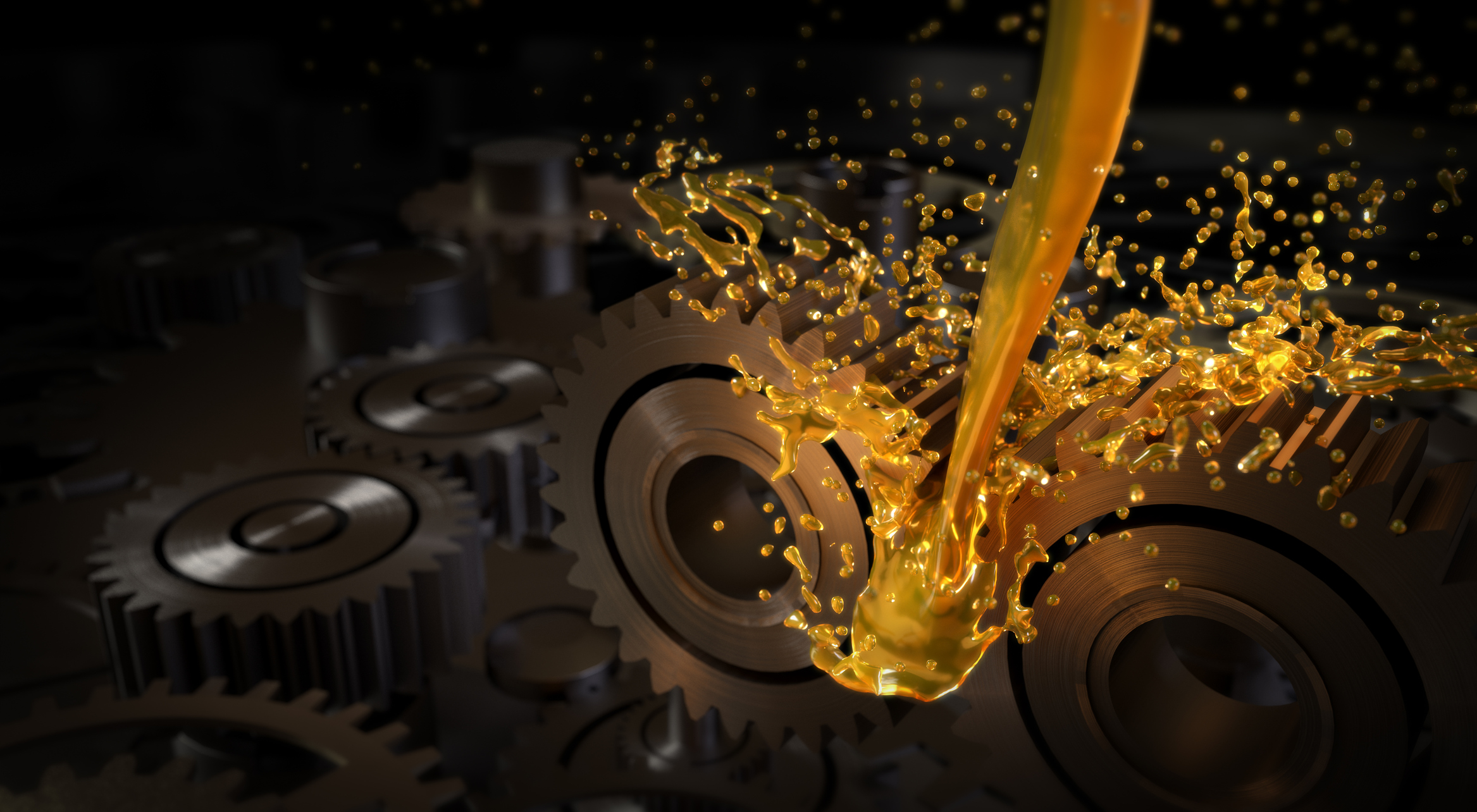
Gear oil improves equipment reliability by reducing friction, protecting loaded surfaces, carrying heat away from components and helping prevent corrosion and premature wear.
Industrial gearboxes often operate under demanding conditions. Gear teeth may be exposed to high loads, repeated contact, vibration, temperature changes and continuous operation. Without a suitable lubricant, the surfaces can wear quickly, generate excessive heat and become vulnerable to damage.
The correct gear oil creates a protective film between moving components. It also contains additives designed to support performance under the conditions for which the oil was formulated.
However, simply having oil in a gearbox is not enough. Reliability depends on using the correct product, maintaining the right level and controlling contamination.
Gear oil that is too thin, too thick, contaminated or incompatible with the equipment may fail to provide the intended protection.
What does gear oil do inside industrial equipment?
Gear oil performs several important functions inside a gearbox or geared drive system.
Its primary role is to reduce friction between moving surfaces. As gear teeth engage, their surfaces roll and slide against each other under load. A suitable oil film helps prevent direct metal-to-metal contact.
Gear oil also helps:
- Reduce wear
- Carry heat away from contact areas
- Protect against rust and corrosion
- Remove small particles from loaded surfaces
- Reduce noise and vibration
- Protect bearings and shafts
- Support seals
- Maintain smooth power transmission
The oil must continue performing these functions throughout the operating cycle.
In some equipment, the gears dip into an oil bath and distribute lubricant around the housing. Other systems use pumps, spray systems or forced circulation.
The application method affects the type and viscosity of oil required. An oil that is suitable for a slowly rotating enclosed gearbox may not perform correctly in a high-speed circulated system.
How does gear oil reduce friction and wear?
Gear surfaces are not perfectly smooth.
Even polished metal contains microscopic high points. When two gear teeth make contact, these raised areas can touch and generate friction.
A suitable gear oil forms a film that separates the surfaces as much as possible. This reduces direct contact and limits the amount of material removed during operation.
The thickness and strength of that film depend on:
- Oil viscosity
- Operating temperature
- Gear speed
- Applied load
- Surface condition
- Oil formulation
- Contamination level
When the lubricant film is strong enough, the gears can transmit load with reduced wear.
When the film becomes too thin or breaks down, the surfaces may begin to contact each other. This can lead to polishing, scratching, scuffing, pitting or more serious damage.
Gear oil therefore contributes directly to component life.
Why is load protection important?
Industrial gears may be exposed to significant loads, particularly during start-up, shock loading or changes in production demand.
The pressure between gear teeth can become extremely high in a small contact area. Under these conditions, an ordinary oil film may not provide enough protection.
Some gear oils contain extreme-pressure or anti-wear additives. These additives are designed to protect surfaces where the lubricant film becomes very thin under load.
They may form a protective layer on the metal surface, helping reduce welding, scoring and scuffing.
The required additive system depends on the gearbox design and materials.
A product with stronger extreme-pressure performance is not automatically suitable for every gearbox. Certain metals, seals or components may require a different formulation.
The equipment manufacturer’s recommendations should always guide product selection.
How does viscosity affect equipment reliability?
Viscosity is one of the most important properties of gear oil.
It describes how easily the oil flows at a given temperature.
The correct viscosity helps the oil maintain a protective film while still circulating through the gearbox.
What happens if gear oil is too thin?
Oil that is too thin may not provide sufficient film thickness between loaded components.
This can result in:
- Increased gear contact
- Accelerated wear
- Surface pitting
- Higher operating temperatures
- Greater noise
- Reduced protection during heavy loading
- Shorter component life
Thin oil may be especially problematic when equipment operates slowly under heavy load.
At lower speeds, the movement of the gears may not generate a strong lubricant film. The oil must therefore provide enough viscosity to maintain separation.
What happens if gear oil is too thick?
Oil that is too thick can also reduce reliability.
Potential effects include:
- Poor circulation
- Increased energy consumption
- Higher start-up resistance
- Inadequate lubrication at cold start
- Excessive churning
- Increased operating temperature
- Reduced oil flow to bearings
- Pressure problems in circulated systems
A gearbox may consume more power because components have to move through a fluid that is too resistant to flow.
The thick oil may also take longer to reach critical components after start-up, particularly in cold conditions.
The best gear oil is therefore not simply the thickest product available. It is the oil with the correct viscosity for the gearbox and its operating conditions.
How does gear oil control heat?
Friction naturally generates heat.
A well-selected gear oil reduces the amount of friction created and carries heat away from the gear contact area.
In splash-lubricated systems, the oil circulates around the gearbox as the gears rotate. In larger systems, pumps and coolers may control the oil temperature more actively.
If the oil cannot flow correctly or has degraded, temperatures may rise.
Excessive heat can:
- Reduce lubricant viscosity
- Accelerate oxidation
- Damage seals
- Promote deposit formation
- Shorten bearing life
- Reduce additive effectiveness
- Increase leakage
- Distort components
Heat can create a damaging cycle.
As the lubricant becomes hotter, it may thin or degrade. Its ability to protect the gears declines, which creates more friction and still more heat.
Maintaining the correct oil type, level and condition helps interrupt this cycle.
How can gear oil prevent corrosion?
Gearboxes may be exposed to moisture through condensation, damaged seals, washdown processes or humid operating environments.
Water can cause rust on gears, bearings and internal surfaces. It may also weaken the lubricant film and interfere with additives.
Gear oils often contain corrosion-inhibiting additives intended to protect metal surfaces.
However, these additives cannot compensate indefinitely for ongoing water ingress.
Reliability depends on both the lubricant and the condition of the gearbox.
Businesses should investigate:
- Damaged seals
- Missing or ineffective breathers
- Condensation
- Open inspection covers
- Poor storage before installation
- Water entering through cleaning processes
Removing the contaminated oil without correcting the source of moisture may only provide temporary improvement.
What role does oxidation resistance play?
Gear oil is exposed to heat and oxygen during operation.
Over time, this can cause oxidation, which changes the chemical condition of the oil.
Oxidised oil may:
- Thicken
- Form sludge
- Produce varnish
- Create acidic compounds
- Block filters
- Restrict oil passages
- Increase operating temperatures
- Lose protective performance
Oxidation resistance helps the oil remain stable for longer under appropriate operating conditions.
The rate of degradation depends on temperature, contamination, oil formulation and equipment design.
High temperatures accelerate oxidation. Even a moderate increase in operating temperature can reduce lubricant life significantly over time.
This is why unexplained temperature changes should be investigated rather than treated as normal ageing.
Can gear oil reduce noise and vibration?
A suitable gear oil can help reduce mechanical noise by maintaining a protective film and supporting smoother contact between gear teeth.
However, oil should not be viewed as a cure for every noise or vibration problem.
Increased gearbox noise may indicate:
- Low oil level
- Incorrect viscosity
- Gear wear
- Bearing damage
- Misalignment
- Contamination
- Broken teeth
- Excessive backlash
- Loose mountings
- Overloading
Changing the oil may improve operation if the existing product is unsuitable or degraded. It will not repair damaged components.
Noise and vibration should therefore be assessed alongside oil condition, temperature and maintenance history.
How can contamination affect gear oil performance?
Contamination can significantly reduce the reliability benefits of gear oil.
Common contaminants include:
- Water
- Dust
- Metal particles
- Sand
- Process materials
- Cleaning chemicals
- Another lubricant
- Rust
- Seal debris
Solid particles can pass between loaded gear surfaces and cause abrasion.
Water may promote corrosion and weaken the lubricant film.
Mixing a different lubricant can alter viscosity, additive performance and compatibility.
The gearbox may continue operating while the contamination gradually increases wear.
Contamination control should include:
- Clean storage
- Sealed containers
- Dedicated transfer equipment
- Suitable breathers
- Clean fill points
- Effective filtration
- Regular inspections
- Controlled oil sampling
The cleanliness required depends on the equipment. Precision or heavily loaded systems may be more sensitive than simple, slow-moving gear drives.
What happens when the oil level is too low?
Low oil level can prevent the lubricant from reaching all required components.
In a splash-lubricated gearbox, gears may not dip far enough into the oil to distribute it effectively.
This can cause:
- Lubricant starvation
- Higher temperatures
- Increased wear
- Bearing damage
- Gear tooth damage
- Excessive noise
- Rapid oil degradation
Low level may result from leaks, incorrect filling, evaporation of lighter contaminants or poor maintenance checks.
A gearbox should not simply be topped up repeatedly without investigating why the level is falling.
Persistent oil loss may indicate:
- Damaged shaft seals
- Loose drain plugs
- Failed gaskets
- Cracked housings
- Blocked breathers causing pressure
- Overfilling and discharge
- Incorrect oil viscosity
The correct oil level should be confirmed using the manufacturer’s procedure. Overfilling can also cause problems.
Can too much gear oil damage equipment?
Yes. Overfilling a gearbox can increase churning as rotating components move through excessive oil.
This may lead to:
- Increased heat
- Foaming
- Energy loss
- Pressure build-up
- Oil leakage
- Seal damage
- Aeration
- Reduced lubrication performance
Foamed or aerated oil contains trapped air. This can reduce film strength and interfere with circulation.
A rising oil level may also indicate that another fluid is entering the gearbox, such as water or process material.
Oil level should therefore be checked carefully rather than assumed to be correct because the gearbox appears full.
How do seals affect gear oil reliability?
Seals keep lubricant inside the gearbox and help prevent contaminants from entering.
An unsuitable gear oil may affect certain seal materials, causing them to harden, swell, shrink or leak.
Seal failure may then create two problems:
- Lubricant escapes from the gearbox.
- Water and dirt gain a route into the equipment.
The lubricant’s compatibility with seals should be considered during selection.
Leakage should be investigated promptly. Cleaning the outside of the gearbox and topping up the oil does not address the cause.
Maintenance teams should inspect:
- Shaft seals
- Gaskets
- Inspection covers
- Breathers
- Drain plugs
- Level indicators
- Pipe connections
A reliable gearbox depends on the complete lubrication system, not only the oil itself.
What are the signs that gear oil is no longer effective?
Gear oil may need investigation when equipment behaviour or lubricant appearance changes.
Warning signs include:
- Increased gearbox temperature
- New or louder operating noise
- Vibration
- Darkened or cloudy oil
- Burnt odour
- Visible metal particles
- Foaming
- Sludge
- Water separation
- Repeated filter blockage
- Oil leakage
- Increased power consumption
- Rapidly falling oil level
Some changes are normal as oil ages, but significant or rapid deterioration should not be ignored.
A visual inspection can identify obvious problems, but appearance alone does not confirm whether the oil remains suitable.
Oil can look clean while its viscosity, additive performance or contamination level has changed.
How can oil analysis improve gearbox reliability?
Oil analysis can provide information about both lubricant condition and internal equipment wear.
A gearbox oil sample may be tested for:
- Viscosity
- Water
- Wear metals
- Particle contamination
- Oxidation
- Acidity
- Additive elements
- General physical condition
Repeated samples can show whether wear or contamination is increasing over time.
For example, a rising iron result may suggest increasing wear of ferrous components. Water may indicate seal or breather problems. A viscosity change could suggest oxidation or mixing with another oil.
The results should be interpreted alongside equipment type, operating hours, maintenance activity and previous samples.
Oil analysis does not replace physical inspection, but it can help maintenance teams decide when further investigation is justified.
How often should gear oil be changed?
There is no universal gear oil change interval.
The appropriate interval depends on:
- Manufacturer recommendations
- Operating temperature
- Load
- Duty cycle
- Oil type
- Contamination
- Gearbox design
- Operating environment
- Maintenance history
- Oil analysis results
Some equipment follows fixed time or operating-hour intervals. Other sites use condition-based maintenance supported by sampling.
Changing oil too late can allow degradation and contamination to damage components.
Changing it too early may waste usable lubricant, increase maintenance labour and create additional waste oil.
The best approach is a controlled schedule based on equipment guidance and reliable condition information.
Should a gearbox be flushed during an oil change?
Flushing may be considered when:
- The old oil is heavily oxidised
- Sludge or deposits are present
- The wrong lubricant was used
- Incompatible oils have been mixed
- Significant contamination has entered
- The equipment manufacturer recommends it
- The gearbox has suffered internal failure
Routine flushing is not automatically required for every oil change.
An unsuitable flushing product or poor procedure can introduce new contamination or leave incompatible residue behind.
Where flushing is necessary, the method should reflect the gearbox design and manufacturer guidance.
Simply draining and refilling may not remove oil trapped in bearings, pipes, coolers or internal cavities.
How should businesses choose the correct gear oil?
Gear oil selection should begin with the equipment manufacturer’s recommendations.
Important factors include:
- Required viscosity grade
- Gear type
- Operating speed
- Load
- Temperature range
- Lubrication method
- Seal materials
- Component metals
- Required performance specifications
- Environmental conditions
The selected oil should meet the stated technical requirements.
Businesses should not assume that products with the same viscosity are interchangeable.
Two oils may differ in:
- Base oil type
- Additive system
- Extreme-pressure performance
- Water-separation characteristics
- Oxidation stability
- Seal compatibility
- Intended application
A knowledgeable lubricant supplier can help explain product information and identify suitable options, but the final choice should remain aligned with the machinery requirements.
Can one gear oil be used across several machines?
Sometimes one approved product may suit several gearboxes.
This can simplify storage, ordering and technician training.
However, consolidation should only happen where the equipment requirements genuinely overlap.
Using one oil for convenience can create problems if the machines differ in:
- Viscosity requirement
- Gear design
- Load
- Speed
- Operating temperature
- Materials
- Additive compatibility
A lubricant review can help identify genuine duplication while protecting equipment-specific needs.
The objective should be a controlled product range, not the smallest possible number of oils.
Why is correct storage important?
Gear oil can become contaminated before it reaches the equipment.
Storage controls should protect it from:
- Water
- Dust
- Chemicals
- Other lubricants
- Damaged packaging
- Temperature extremes
- Incorrect identification
Containers should remain sealed and clearly labelled.
Transfer pumps, hoses and containers should be dedicated where cross-contamination could affect performance.
Bulk tanks should have suitable breathers, fill controls and dispensing arrangements.
New oil should not automatically be assumed clean enough for every sensitive application. Some systems may require filtration during transfer.
What role does regular inspection play?
Gearbox reliability depends on finding changes early.
Routine inspection should consider:
- Oil level
- Leakage
- Temperature
- Noise
- Vibration
- Breather condition
- Seal condition
- Oil appearance
- Filter condition
- Mounting security
Maintenance teams should record observations so that gradual changes can be identified.
A gearbox that becomes slightly hotter every month may not attract immediate attention. A documented trend makes the change easier to recognise.
Lubricant performance should be viewed as part of the overall equipment condition.
Frequently Asked Questions
Is gear oil the same as engine oil?
No. Gear oils and engine oils are formulated for different operating conditions and components. They may use different viscosity systems and additive technologies and should not be substituted without approval.
Can thicker gear oil stop gearbox noise?
It may temporarily reduce some noise, but using a thicker oil without checking the equipment requirements can cause poor circulation, overheating and increased energy use. The cause of the noise should be investigated.
What colour should gear oil be?
Colour varies between products and can change during service. Colour alone does not confirm lubricant condition or suitability. Significant darkening, cloudiness or visible debris should prompt further investigation.
Can different gear oils be mixed?
Mixing should be avoided unless compatibility has been confirmed. Products with similar viscosity may still use different base oils or additive systems.
Does new gear oil need to be filtered?
Not every gearbox requires filter-on-fill, but new oil should not automatically be assumed to meet the cleanliness requirement of sensitive equipment. The decision should follow manufacturer and site guidance.
Using gear oil as part of a reliability strategy
Gear oil improves equipment reliability by protecting loaded surfaces, controlling friction, carrying heat and helping prevent corrosion.
These benefits depend on more than choosing a product labelled as gear oil.
The lubricant must have the correct viscosity, appropriate additive system and compatibility with the gearbox materials and operating conditions. It must also remain clean, at the correct level and within a suitable service interval.
Regular inspections and oil analysis can help identify contamination, degradation and internal wear before they develop into larger failures.
Businesses should treat gear oil selection and maintenance as part of their wider reliability strategy. A well-managed lubrication system can support longer component life, more predictable maintenance and reduced risk of unplanned downtime.
CP Lubricants supplies gear oils and other lubrication products for industrial, automotive and commercial applications. Explore the lubricant product range or contact the team to discuss your equipment and supply requirements.
Phone: 023 8033 7800
Email: sales@cplubricants.co.uk
Find out more: CP Lubricants
Want to know more? Get in touch
Find us on Google Maps