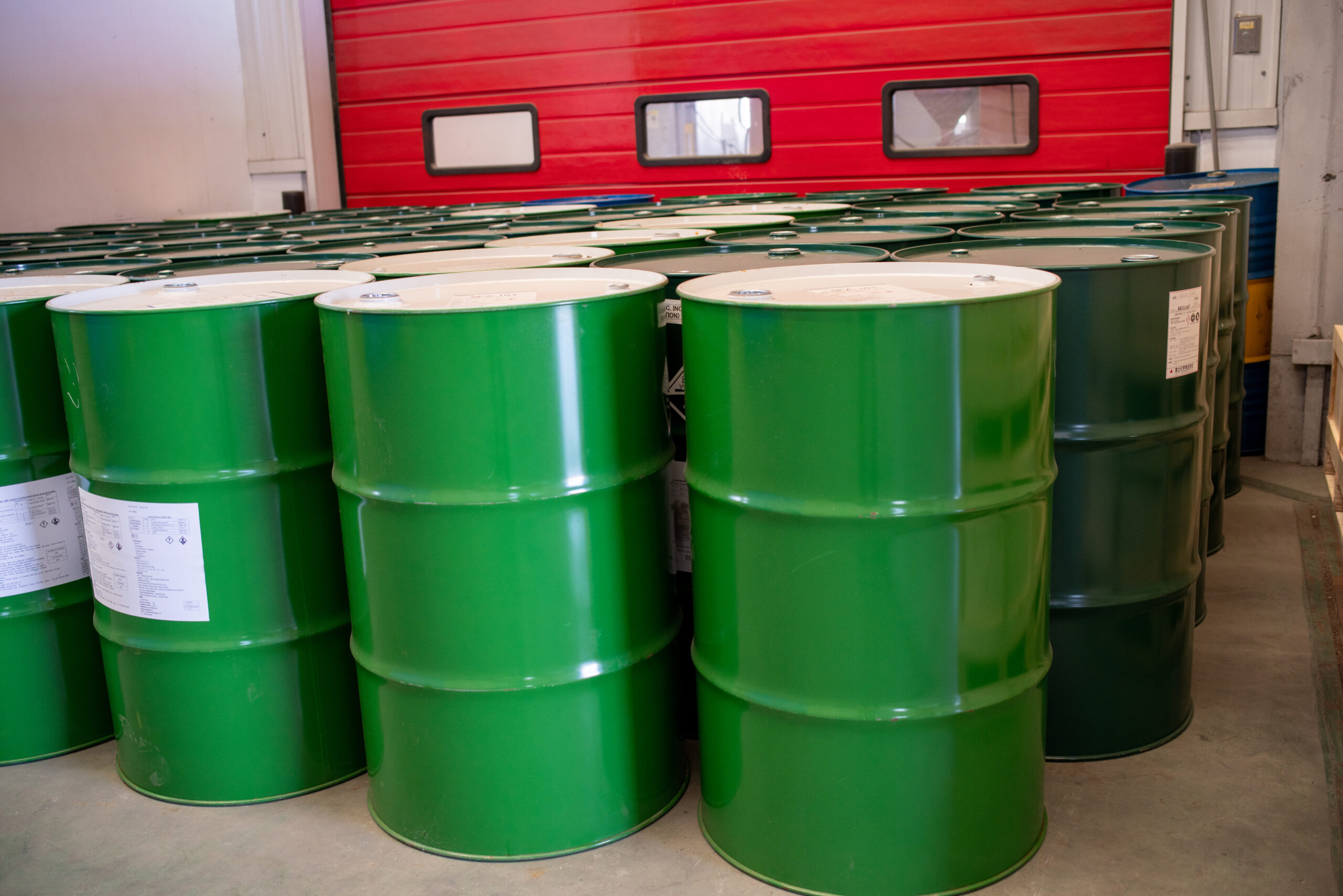
Effective lubricant stock management helps businesses maintain the products they need without tying up unnecessary money and storage space in excess inventory. For industrial sites, engineering workshops, garages and commercial maintenance operations, it can also reduce the risk of running out of essential oils or accidentally using the wrong product.
Lubricants are often treated as routine consumables, but their availability can have a direct effect on maintenance schedules and equipment reliability. A missing hydraulic oil may delay a repair, while a garage that has overordered a specialist engine oil could be left holding stock that sees little use.
The challenge is finding the right balance between availability and efficiency.
Good stock control requires an understanding of consumption, clear product identification, sensible reorder levels and regular checks on what is actually held on site.
The following practices can help businesses develop a more organised approach to lubricant inventory management.
Why is lubricant stock management important?
Lubricant stock management is the process of monitoring which oils and greases a business holds, how much is available, when additional products are needed and how stock is used.
Its purpose is not simply to keep shelves tidy.
A well-managed inventory helps maintenance teams access suitable products when required, while giving purchasing staff a clearer picture of demand.
Without reliable stock information, businesses may encounter two opposing problems.
The first is insufficient stock. An essential oil might run out before a scheduled maintenance operation, forcing the business to delay work or arrange an urgent replacement order.
The second is excessive stockholding. Large quantities of rarely used lubricants can occupy storage space, tie up working capital and potentially remain unused beyond an appropriate storage period.
Both situations create avoidable costs.
For example, a manufacturing facility may use one hydraulic oil regularly across several machines but require a specialist gearbox lubricant only during annual maintenance.
Ordering both products at the same frequency would make little sense.
The hydraulic oil requires frequent monitoring and replenishment, while the gearbox lubricant may be better purchased according to the maintenance programme.
Effective stock control recognises these differences rather than applying the same purchasing process to every product.
How can businesses create an accurate lubricant inventory?
The first step is to establish exactly what is currently held on site.
This can be more complicated than it appears, particularly where lubricants are stored in several workshops, maintenance areas or individual departments.
Products may have been purchased under different brand names, transferred between storage locations or retained after machinery has been replaced.
An initial stock review should identify every product and establish whether it is still required.
What information should a lubricant stock record include?
A useful inventory record should contain enough information to support purchasing and maintenance decisions.
| Information | Why it matters |
|---|---|
| Product name and manufacturer | Identifies the lubricant currently held |
| Required specification | Confirms the product’s intended technical requirements |
| Viscosity grade | Helps distinguish between similar products |
| Container size | Supports quantity and usage calculations |
| Quantity available | Establishes current stock levels |
| Storage location | Helps staff locate the correct product |
| Delivery or batch information | Supports traceability and stock rotation |
| Equipment or application | Shows where the lubricant is approved for use |
A simple spreadsheet may be sufficient for a small workshop, while a larger industrial operation might benefit from integrating lubricant records into its existing stock management or maintenance software.
The important factor is consistency.
An inventory that is updated only occasionally will quickly become unreliable, regardless of how sophisticated the system is.
Why should equipment requirements be included?
Recording lubricant specifications alongside machinery applications helps distinguish between products that appear similar.
For example, an engineering facility might hold two hydraulic oils with the same ISO viscosity grade but different performance characteristics.
If the inventory records only the viscosity, purchasing or maintenance personnel could mistakenly treat the products as interchangeable.
Linking each lubricant to its approved applications reduces this risk.
It can also help businesses identify products that are no longer required following machinery changes.
How much lubricant stock should a business keep?
There is no universal quantity that every business should hold.
The appropriate level depends on consumption, delivery lead times, operational requirements and the consequences of running out.
A product used daily in critical production equipment usually requires a different stockholding strategy from one used occasionally during planned maintenance.
The most useful starting point is to calculate average consumption.
How can businesses calculate reorder levels?
A basic reorder calculation considers how much lubricant is likely to be consumed during the time between placing an order and receiving delivery.
For example, imagine a manufacturing site uses approximately 100 litres of hydraulic oil each week.
If its normal supply lead time is two weeks, expected consumption during that period is 200 litres.
The business might also maintain an additional 100 litres as safety stock to accommodate unexpected requirements.
Its indicative reorder point would therefore be:
| Calculation | Quantity |
|---|---|
| Average weekly consumption | 100 litres |
| Expected consumption over two weeks | 200 litres |
| Additional safety stock | 100 litres |
| Reorder point | 300 litres |
In this example, the business would arrange replenishment when its available stock, taking account of outstanding orders, reached approximately 300 litres.
These figures are illustrative rather than a recommended standard.
The safety stock requirement should be based on actual consumption patterns, supply uncertainty and the operational consequences of shortages.
An operation with unpredictable demand or longer delivery lead times may require a different approach.
Should businesses hold emergency lubricant stock?
For critical machinery, maintaining a carefully assessed reserve can be sensible.
However, emergency stock should not become an excuse for keeping excessive quantities of every lubricant.
The priority should be products that are essential to operations, difficult to obtain at short notice or required for unexpected maintenance.
For less frequently used oils, businesses may find that planned ordering provides better value than holding substantial quantities indefinitely.
How can businesses forecast lubricant consumption more accurately?
Historical purchasing records provide a useful starting point, but purchases and actual consumption are not always the same.
A business that orders 1,000 litres of oil in one month may use that quantity gradually over several months.
Forecasting should therefore consider actual lubricant usage wherever reliable information is available.
Maintenance schedules are especially useful.
For example, a facility operating several gearboxes may have relatively low routine gear oil consumption but require significantly more during a planned shutdown.
If purchasing is based entirely on average monthly demand, the additional requirement might be overlooked.
The maintenance department should communicate upcoming oil changes, equipment servicing and other activities likely to affect consumption.
Why should production changes influence lubricant orders?
Changes in operating hours, equipment utilisation and machinery can alter lubricant demand.
A manufacturing site introducing an additional production shift may experience greater lubricant consumption or require more frequent maintenance.
Likewise, replacing an older machine could reduce demand for one product while introducing a completely different lubricant specification.
Stock forecasts should be reviewed when operational conditions change rather than relying indefinitely on historical figures.
This is particularly important when a business is considering larger-volume purchasing.
CP Lubricants supplies industrial oils, automotive lubricants, greases and other fluids in packaged and bulk formats.
For businesses reviewing their purchasing arrangements, matching order quantities to actual consumption is important. Larger deliveries may simplify frequent replenishment, but they are only practical when stock turnover and storage facilities justify them.
What is the best way to rotate lubricant stock?
Stock rotation helps businesses avoid retaining products unnecessarily while repeatedly using newer deliveries.
A common approach is first-in, first-out, often abbreviated to FIFO.
Under this system, older suitable stock is issued before more recently received products.
For example, if a workshop receives another delivery of engine oil while unopened containers remain from a previous order, the older stock would normally be used first.
However, stock rotation should not be based solely on delivery dates.
Manufacturing dates, supplier recommendations, product condition and storage history can all affect whether a lubricant remains suitable.
Do industrial lubricants have a shelf life?
Lubricants do not all share one standard shelf life.
Their storage stability depends on factors including base oil type, additive formulation, packaging and environmental conditions.
Some products may remain suitable for extended periods when correctly stored, while others have more specific handling or storage requirements.
Greases and certain specialist fluids may also require particular attention to manufacturer recommendations.
A container that has been stored for several years should not automatically be assumed suitable merely because it remains unopened.
Where stock age or condition is uncertain, technical advice should be obtained before the product is used.
How can businesses prevent stock becoming obsolete?
Lubricant requirements can change when equipment is replaced or manufacturers update product specifications.
A business may continue purchasing an established lubricant without realising that the machinery requiring it has been removed.
Regular inventory reviews should therefore identify products with little or no recent consumption.
These products can then be checked against current equipment requirements.
Where a lubricant is no longer needed, the business should establish whether it remains suitable for another approved application or requires appropriate disposal.
How can clear labelling reduce stock management errors?
Product identification is one of the most important practical aspects of lubricant stock control.
Industrial sites may store multiple oils in similar drums, containers or bulk tanks.
When labels are damaged, incomplete or difficult to read, staff may accidentally select the wrong product.
This is particularly concerning when lubricants have similar viscosity grades but different specifications.
What should lubricant labels identify?
At a minimum, product identification should make it clear which lubricant is stored and where it is approved for use.
Where applicable, useful information includes the product name, viscosity, relevant specification and any necessary handling or safety information.
Additional storage labels can also identify the receiving date, batch information and designated equipment.
Original manufacturer labels should be retained wherever possible, with statutory hazard and safety information remaining available.
Why do dispensing containers matter?
Stock management does not end when lubricant leaves its original container.
A correctly labelled drum can still lead to problems if its contents are transferred into an unmarked jug or contaminated dispensing equipment.
Businesses should establish clear procedures for transferring lubricants into machinery.
Where practical, dedicated pumps, hoses and dispensing containers can help reduce accidental mixing.
These arrangements are particularly valuable for workshops handling several hydraulic oils, engine oils or gear oils.
A straightforward identification system can be effective, provided it is consistently applied and supported by accurate product records.
How can stock management help prevent lubricant contamination?
Contamination is normally associated with lubricant condition rather than purchasing, but inventory practices can influence the risk.
Poorly organised stockrooms may contain open containers, damaged drums or products that have been repeatedly transferred between different vessels.
Each unnecessary handling operation can create an opportunity for moisture, dirt or other contaminants to enter the lubricant.
Effective stock management encourages controlled handling and makes it easier to identify stock whose condition is uncertain.
Products should be kept in appropriate containers, protected from unsuitable environmental conditions and checked for obvious damage or leakage.
Where contamination is suspected, the lubricant should not simply be returned to usable stock.
It should be isolated and assessed before any decision is made about further use.
This is particularly important for sensitive hydraulic equipment, where contamination can affect pumps, valves and other components.
What should businesses consider when storing larger lubricant quantities?
Inventory decisions must also account for the available storage facilities.
Ordering larger quantities may reduce purchasing frequency, but additional stock still requires safe, suitable accommodation.
For businesses in England, oil storage regulations can apply to containers holding 201 litres or more of specified oils, including certain lubricating and hydraulic oils. The rules cover matters such as container design, location and secondary containment, subject to defined exemptions.
Different requirements apply across the UK’s devolved nations, so businesses should check the rules relevant to their site.
GOV.UK
+1
Stock control personnel should therefore consider more than the financial cost of purchasing larger quantities.
They should establish whether the premises can accommodate the containers safely and whether additional handling or dispensing equipment is needed.
A site with limited storage space may be better served by smaller, more frequent deliveries than by holding excessive lubricant stock.
CP Lubricants supplies storage and dispensing equipment alongside its lubricant range, including tanks, pumps and meters.
These products can form part of a more organised lubricant handling arrangement where businesses regularly use substantial oil quantities.
CP Lubricants
The right arrangement depends on product usage, premises layout and the requirements of the application.
Who should be responsible for managing lubricant stock?
A common weakness in inventory management is unclear responsibility.
Purchasing personnel may assume maintenance staff are monitoring consumption, while maintenance teams may expect purchasing to identify when stock needs replenishing.
This can result in duplicated orders or unexpected shortages.
Businesses should establish who is responsible for recording deliveries, issuing stock, monitoring reorder levels and communicating upcoming requirements.
In a small garage, one person may handle several of these tasks.
A larger manufacturing site might divide responsibilities between purchasing, stores and maintenance personnel.
The important consideration is that the process remains clear.
How often should lubricant stock be checked?
Check frequency should reflect the importance and consumption rate of the products involved.
High-use lubricants may require weekly or more frequent monitoring, while slow-moving products could be reviewed at longer intervals.
Regular physical counts are useful for confirming that inventory records reflect what is actually available.
Where differences appear, businesses should investigate whether they result from unrecorded usage, incorrect deliveries, damaged stock or recording errors.
Repeated discrepancies are a sign that the stock control process needs reviewing.
What does an effective lubricant stock management routine look like?
A practical system does not need to be complicated.
For many businesses, the following process provides a useful starting point:
- Record existing stock. Identify products, specifications, quantities and storage locations.
- Review consumption. Establish typical usage and identify products required for scheduled maintenance.
- Set reorder levels. Use consumption and delivery lead times to determine when additional stock is needed.
- Rotate suitable stock. Prioritise older stock while checking condition and manufacturer storage guidance.
- Control product identification. Maintain clear labels and appropriate dispensing arrangements.
- Reconcile inventory regularly. Compare physical quantities with recorded balances and investigate discrepancies.
- Review purchasing requirements. Adjust stock levels when machinery, operating hours or maintenance schedules change.
The objective is to create a predictable process that supports maintenance work without generating unnecessary administration.
Businesses should also review the results over time.
If shortages continue despite high stock levels, the problem may involve inaccurate records or poorly chosen reorder points rather than insufficient purchasing.
If large quantities remain unused for extended periods, order sizes may need reducing.
A useful stock management system should respond to these findings rather than remaining unchanged.
Frequently Asked Questions
Should businesses use spreadsheets or dedicated inventory software?
Either can be suitable. A spreadsheet may be sufficient for a small operation with relatively few products. Larger sites managing multiple storage locations or substantial usage may benefit from inventory software integrated with maintenance or purchasing systems.
How can businesses identify slow-moving lubricant stock?
Compare current stock quantities with usage records over a suitable period. Products showing little consumption should be reviewed against current equipment requirements and manufacturer storage guidance before further orders are placed.
Is buying lubricants in bulk always more economical?
No. Bulk purchasing may offer advantages where consumption is consistent, but storage costs, product turnover, handling requirements and the risk of excess stock must also be considered.
Can different lubricant brands be consolidated into one stock item?
Only when the products are technically suitable for the same applications and the relevant manufacturer requirements are met. Similar product names or viscosity grades do not automatically establish equivalence.
What should happen to damaged or unidentified lubricant stock?
The product should be separated from usable inventory until its identity and condition can be established. If suitability cannot be confirmed, it should not be used in machinery and may require disposal through an appropriate waste management arrangement.
Building a More Reliable Lubricant Stock Management Process
Good lubricant stock management is about maintaining the right products in appropriate quantities while making it easy for staff to identify, locate and use them correctly.
Accurate inventory records provide the foundation. Consumption forecasts and reorder levels help prevent shortages, while stock rotation and regular reviews reduce unnecessary stockholding.
Just as importantly, clear product identification and controlled handling help protect machinery against avoidable lubricant selection and contamination problems.
Businesses should review their approach whenever equipment, usage patterns or maintenance schedules change.
CP Lubricants supplies industrial lubricants, engine oils, greases and specialist fluids for commercial and industrial applications. Its range of packaged and bulk supply options, alongside storage and dispensing equipment, can support businesses reviewing how they purchase and handle lubricants.
To explore suitable products, visit the product range.
For advice on lubricant supply quantities, packaging options or equipment requirements, contact CP Lubricants.
Phone: 023 8033 7800
Email: sales@cplubricants.co.uk
Find out more: https://cplubricants.co.uk/